OpenTheo

Creating a Society More Hospitable to Motherhood with Harriet Connor

Alastair Roberts
00:00
00:00

Creating a Society More Hospitable to Motherhood with Harriet Connor

January 30, 2020
Alastair Roberts
Alastair Roberts

Harriet Connor joins me today to discuss ways to produce a society more hospitable to motherhood. She recently wrote a piece on the subject for the Gospel Coalition Australia, called 'Treasuring the Immeasurable Work of Mothers' (https://au.thegospelcoalition.org/article/treasuring-immeasurable-work-mothers/) and is the author of the book 'Big Picture Parents' (https://amzn.to/2vu7rJa).

The following are some of the books and articles mentioned in this episode:

Nancy Pearcey, 'Is Love Enough? Recreating the Economic Base of the Family': http://www.arn.org/docs/pearcey/np_familyinamerica.htm

Nancy Pearcey, 'Love Thy Body': https://amzn.to/2Uf1eeJ

C.R. Wiley, 'Man of the House': https://amzn.to/38T6pVo

C.R. Wiley, 'The Household and the War for the Cosmos': https://amzn.to/3170QA9

Hannah Anderson, Dreaming Better Dreams: The Home, Marketplace, and American Dream: https://mereorthodoxy.com/dreaming-better-dreams-home-marketplace-american-dream/

If you have any questions or feedback, please send them to me on Curious Cat: https://curiouscat.me/zugzwanged.

If you have enjoyed my output, please tell your friends. If you are interested in supporting my videos and podcasts and my research more generally, please consider supporting my work on Patreon (https://www.patreon.com/zugzwanged), using my PayPal account (https://bit.ly/2RLaUcB), or by buying books for my research on Amazon (https://www.amazon.co.uk/hz/wishlist/ls/36WVSWCK4X33O?ref_=wl_share).

The audio of all of my videos is available on my Soundcloud account: https://soundcloud.com/alastairadversaria. You can also listen to the audio of these episodes on iTunes: https://itunes.apple.com/gb/podcast/alastairs-adversaria/id1416351035?mt=2.

Share

Transcript

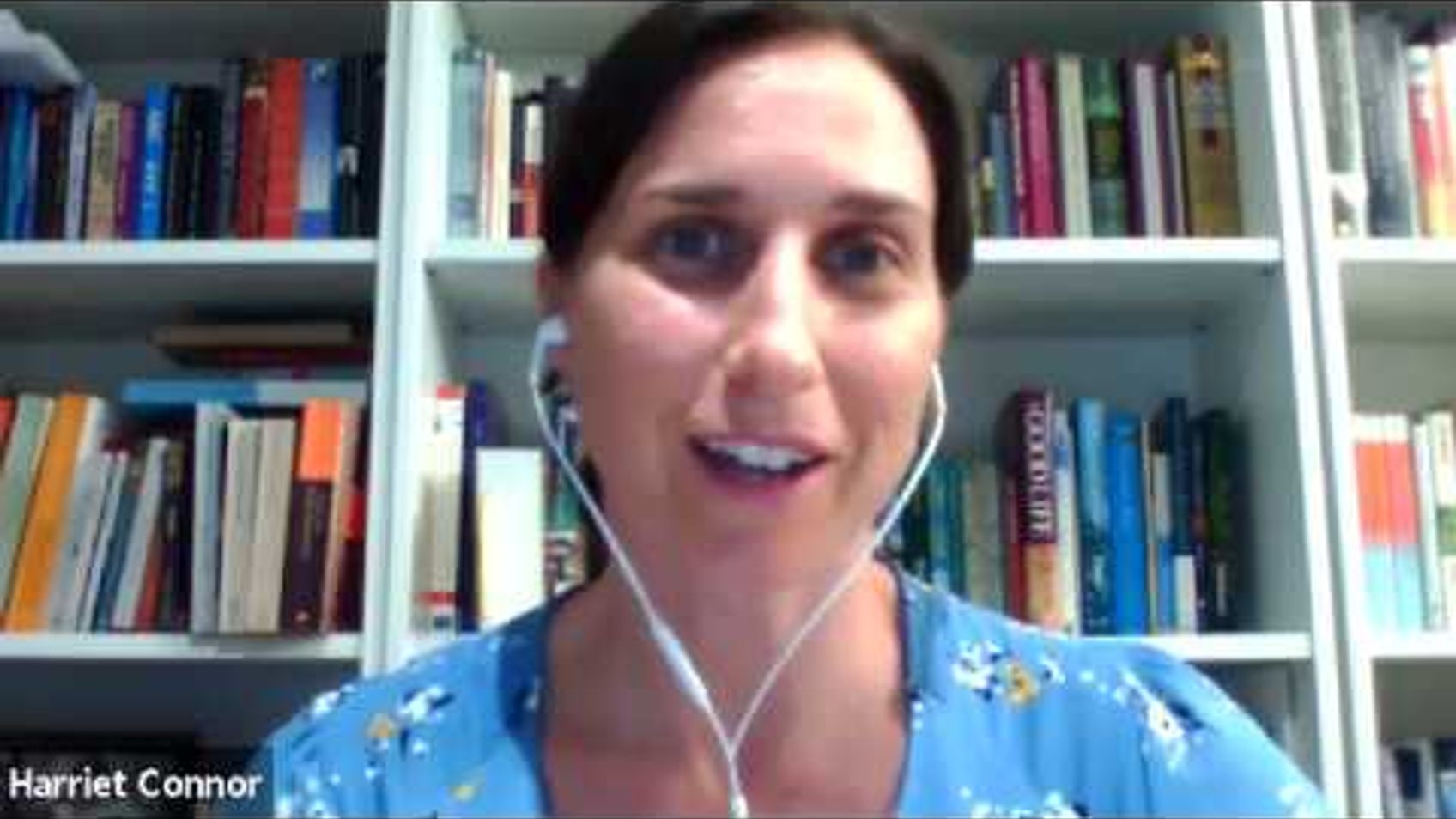
Welcome back. Today, I'm joined by a friend from Australia who's a wife, a mother, and a writer. She's written a recent piece for the Gospel Coalition Australia called Treasuring the Immeasurable Work of Mothers, and also published a book a while back called Big Picture Parents, Ancient Wisdom for Modern Life.
Her name is Harriet Connor,
and I wanted to bring her on to discuss some of the pressures facing mothers today, and some of the ways in which we can use scripture and think wisely about our current situation in order to find solutions. Thank you very much for joining me. You're welcome.
It's great to be here.
Could you tell me a bit about your background? I live in Australia. I studied at Bible College or seminary, and that's where I met my husband, who is an Anglican minister.
He's currently working in a chaplaincy role. We have three sons,
and through that process of becoming a mother, I started to do a lot of thinking about modern parenthood and trying to work out how scripture can help us navigate that stage of life, and that ended up becoming a book. So now I speak and write about similar topics.
So one thing I often get asked on this channel and something I often discuss is the importance of restoring something like the dynamics of the household, and it's something that many people ask me, what does this look like in practice? And I'm in a situation that's fairly anomalous. I'm living as a single person. I live near my parents.
I try and live on foot. There
are a number of things that I do to try and restore some dynamics, but your experience of thinking through and practically working through the issues of motherhood would be far more relevant to many people who are listening. So you recently wrote a piece for the Gospel Coalition Australia.
I'll leave the links for that in the show notes. Could you tell us a bit about some of the issues that you explored within that piece and share some of your own experience thinking through these issues and working through them? Sure, it really sprang out of a personal dilemma, as most of my thinking and writing does. Our youngest son is going to start school next year, and I've given myself this year to think through what am I going to do with my time once he starts attending school during the week.
And there's a very clear modern script for this
change, and that is that once your youngest child starts school, you should find a paid job outside of the home. But I've just been thinking about how modern that script is, that our grandmothers, or at least my grandmothers, didn't follow that script. Neither of them ever had a paid job outside of the home after having children.
And so I've just been thinking about what were my
grandmothers doing. I think the modern economy wouldn't value what they were doing. It would wonder what they were doing with their time and what they were doing with their marketable skills.
But I've just been thinking about the things they were doing and realising they may not have had a paid job, but they were certainly living out God's purpose for their lives, their vocation as mothers. And so I guess I've just seen a mismatch between our modern economy and the work of mothers, because our modern economy sort of severs the sort of natural bonds between people and then tries to replace them with artificial professional relationships between clients and professionals. And I just think, I just want to ask the question, what do we lose? What do we lose if we send mothers out of the home automatically, if we insist that they leave their natural relationships and then go and work, do paid work or real work for strangers? So they're the sorts of questions I've been asking.
I've tried to come up with a few principles to
help myself and maybe other mothers to think about how we can find work if we need work, find work that sort of honours our identity as a mother rather than competes with it. So I make some more practical suggestions at the end of the article. Thank you.
You talk a lot about the shift in the
shape of motherhood and the lives of mothers in contemporary society. And there are definitely gains that we can see that women have experienced in the last century. And yet there seem to be other pressures that struggles that have come with these.
What are some of the particular pressures
and tensions that you think mothers today experience that maybe their grandmothers did not? I think mothers today feel very much pulled in many different directions. I think perhaps in the past, the home was a real hub where lots of things could happen at the same time, whereas now our children go out to school and all the different activities we do are off-site. And so we have to travel here and there and we feel physically pulled.
We're driving in lots
of different directions every day and every week. But I think emotionally as well, women feel a great pressure to work, I think. And then if they do work, that then comes with a sense of guilt about their child raising.
And a lot of women feel like they're just doing neither of those
things very well. So I think there is a real pressure now on women to work. Just today at school drop-off, someone said, you know, what are you going to do when your youngest starts school? I guess you'll get a job.
I mean, it's just a given. And so I feel that pressure. And I think
many women do feel that pressure to find a job or even to make it a really high-flying career, not just a job, but also some kind of impressive career.
And trying to combine that with
raising children and feeling that you're doing both well-ish is very difficult. And those different tensions and pressures in different directions, they're often pulling you towards good things in each direction. It's not a bad thing at all to have a sense of a calling to express your gifts and talents and to have an outlet for those in some sort of productive labor.
But yet being pulled towards the raising of your children,
the context of the home forming world within the home, and the other pressures that you have pulling you towards a community, towards a site of worship and a community of worship, all of these things can be pulling you towards good things. But maybe the struggle is more that those things are now pulling you in different directions. And you're going to have to choose between one of those things or a couple of those things over others in ways that maybe you would not have to have chosen so much in the past as those things could have been better integrated.
Yes, I think a simple example is in the past women might have taught in a school, taught in now in Australia, we have something called scripture or special religious education where even in public schools, children can have a Christianity lesson or there are other religions available. But women would volunteer to go and teach those lessons in the local public schools. And if you do that as a volunteer, I know one mother who has taught these kind of classes and she just took her kids with her.
They just came and they sat with the children in the classroom.
And they were part of that ministry. And she was doing two things at once.
She was
raising her own children, teaching them, modelling to them. And at the same time, she was serving these children in the community. But if she had been a paid teacher, she wouldn't be able to do that.
You couldn't bring your children to work. And I think it's just
those kind of informal ministries we've always done are easier to do with a child in tow, because nobody minds. But as soon as it's official and professional, then you can't do both at once.
One time I found helpful that I was introduced to a while back is the distinction between polychronic and monochronic, the way in which some activities for certain people, or in certain cultures, will be polychronic, which means that there'll be a lot of different things being done at once. And so they'll be, on the one hand, they're engaged in commerce and trade. But then there's all these sorts of social activities happening alongside that.
Or the family's very
much mixed in with the life of the workplace. And so you don't leave one behind to go to the other. Whereas for Western society, particularly after the Industrial Revolution, and nowadays, things are extremely monochronic.
And so everything gets separated. And so, as you say,
you're doing professional work, you have to leave your kids behind, you have to separate that realm from the realm of the family. Whereas formally, those things could be happily mixed up together.
And you could be doing that sort of labor or teaching and have your kids in tow. And that would be expected, that would be quite normal. Whereas for us, we end up separating all these different parts of life.
And as a result, I think that's one of the reasons why we just don't have
as much enough hours in the day. Because we're trying to, we have kids, we have the responsibilities of work, we have the responsibilities of household labor, we have the responsibilities to our church, to other communities. And when those things aren't tied together, you end up just having to supplement everything with these extra activities, and you're just rushing around all the time.
Whereas formerly, it would have been easier when those things were intertwined.
And you weren't having to choose between family time and work time, for instance, because those things would often go together. I think that's a really good insight.
So one area where you've
spoken to is the, well, clearly, the issues of motherhood are a very personal and emotive area. People have very strong values about how they raise their kids, and can often feel very challenged when people disagree or have different perspectives or practices in these areas. And people have spoken about the mummy wars that can often pit working mothers against stay-at-home mothers.
Do you think there's a way that we can relieve the tensions of that war, and maybe
pursue something better? I think we need to. I think it is a very touchy topic. Because of those emotions, we all want to feel like we've done the best for our kids.
We all want to feel that we've
made the best decisions. And when I think women seem to be naturally competitive in one sense, they sort of always try to compare themselves to the next person and rank themselves almost. And I think we do that because we're insecure about our own decisions in life.
And we feel
guilty that we're not measuring up in certain areas. And I do think we need to find ways of collaborating rather than competing. And I think for me, the thing that has helped the most to bridge the gap between those two sort of camps is to realize that women have always worked.
Mothers have always worked. In the past, when women stayed at home, they weren't just sitting there doing nothing. Well, they weren't just sitting on the floor playing with their children all the time.
Women have always worked, whatever kind of work it might have been, whether they're
involved in the family business or farming or just household chores. They're not just sitting at home, entertaining their children and things like that. And so for me, that's helped that there's not such a hard and fast line between working mothers and stay at home mothers.
We're
all working in some capacity. Some of us may not be paid, but we are. And if you look at the scriptural perspective, all women are called to serve not just their own family, but the wider community and the family of God.
And that's always been the case. And the examples in the
New Testament of women, they're not just narrowly focused in on their own families. That then that reaches out beyond the family to bless the wider family of God particularly.
And I think that
was helpful for me. It's not just about trying to recreate some 1950s ideal, dad at work, mom at home. It's actually about integrating those two worlds.
And I think that's something that would benefit
all women, whether they feel strongly about working in a paid job or feel strongly about staying at home. I think that brings it together, that kind of integration. And also just trying to find common ground that we all want the same things.
We want our children to thrive. And we
also want to find ways of using our God-given gifts and talents. And so I think to start with that common ground and finding ways that we can help each other and support each other.
I mean,
if you judge another mother for the way she's raising her children, if you are really concerned about those kids who are offered to help, offered to support, rather than just sort of criticize her decisions in life. I think that can really bridge the gap to the tensions that you mentioned, I suppose also heightened by the fact that there is no straightforward workable cultural script. That there would have been more of a standard cultural script on these things in the past, but now there are ones that pull in different directions.
And so it's very difficult for people
to have some sort of consensus. You also mentioned the ideal 50s home, and I presume that you have questions about how ideal that was. When we're thinking about these issues, there is a very particular cultural situation that is novel in many ways.
And often I think we can have these
conversations without really taking stock of what has changed, where it has changed, and what pressures have arisen simply from social shifts that have occurred. And what have you found to be the benefit of having a clearer sense of the social changes that frame our current debates and problems and challenges? I think it's really important. I mean, I set out to write a book a couple of years ago about what I thought the Bible said to parents about the task of raising children.
And I really wanted to confine myself to just exactly what I thought the Bible was teaching
or assuming about parents. And I published the book and I'm now learning so much more. It's not just about, it's not that you want to go beyond what scripture says, but I think you really need to understand the context in which the scriptures were written.
And as you say, how
things have changed. So that's really something I've only been learning about in the past couple of years. I've learned a lot from some of your videos and from reading books and articles by other people.
And I think it gives you a much bigger perspective. I think it's really important
to ask the question or to realize that we haven't always lived and worked and raised our children in the way that we see to be normal today. And I think we can worry about why our marriages or our families are weak without realizing, I think the main reason is because as I've heard you describe it, we don't put weight on them anymore.
That we don't depend on one another for the basic
necessities of life as we did in the past. And I think we need to ask those bigger questions. I think often family life can just be so busy.
It's like we're just on a hamster wheel and we're
just running and running and running. And we don't actually stop to think, well, why are we doing this? Or is this actually how we want to live our lives? This is actually the way that all the people in our family are going to thrive. We just follow the scripts without thinking.
We just hop on the wheel.
I think looking at the past really helps to give us a broader perspective and give us a greater imagination for how we could do things differently. So one of the dangers it seems to me lies in an idealized nostalgia of the past.
And I think
many people talk about, for instance, trad wives, the idea of a conservative approach, where we're just trying to retrieve a past age, maybe return to an agrarian situation. Is there some alternative to just being conservative or reactionary in our approach to this, trying to retrieve some idealized past? What sort of instinct should we bring to this? What should drive us in our quest for what is good here? Is the past the ideal, or is there some other ideal? And then if there is some other ideal, how should we frame it? I think that's a very tough question. I personally tend towards nostalgia.
I tend to look at the
past with rose, through rose-colored glasses. And I need to remind myself that that's not what this is about. We actually need a way forward because we can never wind back the clock.
I think when we talk about being conservative, I think often people,
it's that 1950s ideal that people want to conserve. But I think, yeah, I've read some good books recently that are trying to imagine a way forward and see that there are actually great advantages today in the technologies that we have and so forth that can help us to step forward into a healthier situation with our family life, particularly. I think, yeah, for me, it's really about inching towards an ideal.
We're always somehow caught between the ideal and what
our real life. And it's a very difficult place to be in. You can just be disappointed with your life all the time, or you set your mind and heart on the ideal.
And then just every time a decision
presents itself, you just choose that way, not this way. And you're just inching towards this ideal in the little things. And hopefully, you're making some progress with time.
I guess a key idea for me has been taking back responsibility. I think in our modern life, we've delegated that. We've outsourced so much of our responsibility to other people, to schools, or to government services.
And I think that's a key principle for us as a family to try to
take back the responsibility for those things, for caring for children, for educating children, caring for the elderly, even providing food for ourselves, just learning about all these things and taking back responsibility is one key principle, I think, that we've tried to live by. I was wondering, just in your experience, have you found adopting a sort of non-perfectionist incrementalism to be an important shift? Because I don't see that much non-perfectionist incrementalism within evangelical circles, for instance. There can often be a certain sort of perfectionism that you see the ideal, and if the ideal seems unreachable, it's very difficult to think of incremental ways in which you can move towards it, inching bit by bit.
Often it can just
seem to be this forbidding judgment upon your current situation, your failures, or your limitations. But certainly in my experience, I've found that has been a shift that had to occur in my thinking that we're not perfect, we're going to fall short, and that's fine. But we can think about the incremental ways in which we can move in the right direction.
I think raising children knocks the perfectionism out of you. You have these grand ideals of what kind of parent you're going to be and what kind of children you're going to raise, and obviously you haven't really got the choice of giving up at that point. You realize you just have to keep striving, just get back up again and try again tomorrow.
And that's what has helped me to realize is actually
in the striving that we're shaped. It's what we're aiming towards that will shape the final destination. I guess for me, I grew up in a family that was very modern, I suppose.
Both of my parents worked full-time for my whole childhood, and we were cared for first in daycare sort of arrangements, and then when we started school by living nannies. I actually didn't see my parents much apart from on the weekends and when they had holidays. So for me, it's a very big jump to going from that family that I grew up in to the kind of family that we would like to have.
And so that's definitely been a gradual process because you can't... Yes, you just naturally arrive in life with the kind of assumptions that you've grown up with, and you slowly, slowly realize that they might not match up to where you want to be. And so for me, it's been a very gradual process of realizing that the natural trajectory of life that I grew up with is probably not quite where we want to head. And just changing one thing at a time as we realize them, as we talk about them.
And so certainly we haven't been able to make any huge changes in our life. We haven't
bought a farm, we haven't decided to homeschool our children, we haven't sort of sold everything. So we haven't been able to make huge changes.
And so I've had to ask myself, well, let's not give
up on the ideal. Let's find small changes. Let's find daily things that we can do.
And
it starts as an attitude. How do you think this sort of approach can be pursued in a way that avoids a culture of judgmentalism or constant comparison? Because I think that's often one of the things that puts people off. And people feel that they're going to be judged.
And so they
resist certain ideals, because as they see themselves falling short in various ways, they think that they'll be opening themselves up to judgment, if they admit their validity. I think that's a difficult question. I suppose living by example is always the first way to start.
And also, while I just sort of collect examples, I'm always just collecting little stories about people doing things differently. So it might just be a case of helping people to gain an imagination for how to do things differently. So in my article, I mentioned one example, a friend who's a hairdresser.
And instead of working in a commercial hair salon, she decided
when they bought a house to buy a house that had a garage that was actually already set up as a home office. So she just made a few changes and set up a little salon in her garage. And so now she can do her work.
But she does it while her kids are there. And while I mean, we go and see
her while my kids are there playing with her kids and we chat and it's a relational activity. But she's also using her God given skills and serving us and earning money at the same time.
So I guess
I just collect stories and real examples and maybe just tell people those kinds of examples and help people to start thinking differently about the possibilities. Much of this is a discussion about what constitutes good labour and how we can improve the character of our labour in a way that glorifies God and also enters into the freedom that God would have us enjoy. How can we think about the relationship between our vocation and our work or our jobs and our vocations? We often use those terms interchangeably.
But it
the distinction between those two things and the distinction worth exploring and then using an understanding of vocation to guide our approach to our jobs or our work. Yeah, I guess in a secular way, people talk about finding meaningful work. I guess for me, it's been important to go back to the Bible, especially Genesis, and just to think about our human vocation.
Obviously,
it's got those two aspects of filling the earth and subduing it, working and caring for creation to the glory of God. So I guess I sort of would start there. But that's where it gets tricky already.
Because I think this whole discussion hinges on how do you see the relationship between
the filling of the earth and then the subduing of the earth. And I think what we're trying to do is bring those two things back together so that they're happening in close proximity or they're happening together or men and women are doing them together. But I suppose not in a both doing the same thing all the time kind of way, but one taking the lead now and the other then in a more organic sort of way.
Yeah, I'd love to hear you describe a little bit how you see
the relationship between those two aspects of our human vocation and how men and women might sort of take the lead in different ways. Well, I think one thing we do see is the way in which there's I think of this even in the judgments that are given to Adam and Eve in chapter three, that there's something about the judgment of the woman that is far more intimate to her. It's related to her body and labor within the body.
And her work has an intimacy and a connection
to her that the man's work does not. The man's work is more outside of himself upon the earth. And so it experiences frustration, but it's a different sort of thing.
And when we think about
the difference between male and female labor, I think that's part of it, that there's something about women's labor in its fullest sense that is inalienable in ways that men's labor is not. Men's labor is far more apt for being brought into a money economy to being men working and then selling what they produced or selling their labor. For women, that's always more of a struggle, particularly as it relates to children.
I mean, if you form a home, if you bear children,
you can't sell those things. They don't have the same character as someone making a chair, for instance, or creating some other object. It's something that you are connected to, and you can't transfer those into some sort of fungible value.
And so I think that by itself
reveals part of the difference between men and women's labor. And the challenge then is to recognize that there is a sort of labor that is externalized and abstracted from people that can become the dominating principle of all labor. And often we can bring that principle back as the measure of the labor of women.
So often people will say, well, if you got someone else to
do all these areas of work that a mother does in the home, this is how much you'll be paying. Now, one thing that does show is just how much we undervalue motherhood and the work that mothers do. But there is no way that you could pay someone to do the same work as a mother within the home, because she's doing something unique.
She's building her home. She's not just building
a generic home. There's something unique that this is hers.
Now, when we value that fungible work,
we can often work into a situation where there's just this pursuit of power as such, and this desire to control and to render everything else interchangeable. But there's something about the home that commits us to a particular place, to a particular reality, to particular persons. And that is a tethering force, I think, for male labor.
And without that,
male labor can often become just this attempt to reduce everything to sources of control, or something over which we can exert control. And that desire to subdue the creation, when there is nothing to actually subdue it for the sake of, or to bring it into relation with, it is a very dangerous force. And I think we're seeing that playing out within our society more generally, this quest for control, without any sense of what that is for, and what good is it ultimately serving.
I think, for instance, if Adam had been left alone without the woman being created,
maybe he would just want to completely terraform the world. And Eden would be seen just as the show home on the housing estate, or something like that, or the base that you return to at the end of the day. But there's no sense of it being a site of life, something into which life flows, and from which life flows.
And that sort of force that pulls things in, that gravity of the home, I think,
is a very important part of life that modern society has tended to lose. We tend to restrict it to the margins of society, and see it as a reservation that you return to, that's detached from all the important things. But yet, unless there's some integration of that forming and filling dynamic, I think we'll end up with a society where there is no heart to society.
And it can be so much subjugation of reality, so much ordering of reality, that we feel trapped within our own systems, because there is no home for us that we have created. And increasingly, I think we're serving, we feel that we're serving systems, we're not actually building a home. And there, I think, the quest to restore the household at the heart of society more generally, is not just something for private benefit, or for the benefit of families, it's something that is absolutely essential for a healthy human society, and for our relationship with the world and the human vocation more generally.
Yes, yeah, I think you're right. And I guess we're talking about
mothers and work, but obviously, another conversation would be the work of men and fathers, because as you say, they're intertwined. And it's not just about trying to help women to work well, but also to help men to work well in that more integrated way, as well.
Because I do
think something I haven't mentioned is the tension in marriages, that our new situation has produced. I read, when I was recently researching for my book, that the division of labour within the home is actually one of the top sources of conflict in modern marriages, because we don't have a script. And I think when women do stay home with the children, and they see their husbands go out to work, and then come home, they sort of forget that while he sees that as working for the family.
But they think that working for the family means coming
home and looking after the children and doing housework and things like that. And I'm sure that's part of it. But once again, we need to find ways of integrating those two things.
So we don't
feel like husbands and fathers are going off to work actually for someone else. Whereas that's his contribution. That's the way he's working for us.
But the way it looks is that he's actually
working for someone else. And there's something of a genuine perception to that, that he's not directly working for the family. There's an indirect, there's an indirect character to that work for the family.
So he may be working genuinely for
the family, but he has to work for someone else's household as it were, in order to bring the resources that will help his own family. And there, I think we experienced some of the tensions that the modern world has introduced into these issues. I want to think about some very specific pressures and losses or changes that women have experienced in relation to motherhood.
So you've mentioned things like the loss of intergenerational relationships and support networks, these sorts of things. So could you give some examples of specific things that have been lost and maybe just help us to realise what was there before, what has been lost and maybe what could be regained if we have some imagination about it? Yes. Well, I think certainly my experience is that I didn't ever see a mother in action or a straight stay at home mother in action until I became one.
So I think a lot of women, if their own mothers are out working,
and if there's very small family sizes, you don't have younger siblings, you don't get to learn those sort of practical skills of caring for babies and children so much. And we move around a lot and so we don't tend to have the sort of connections with our extended family, even if they're not working, they may live far away. And so we don't sort of get that day to day observing of how other older mothers relate to their children or our grandmothers or our mothers.
And yeah, I remember my grandmother talking about how she got to practice looking after a baby when her sister came home during the Second World War because her husband was off fighting, she came home to have her baby. And so my grandmother helped care for this little boy when she was only 14. And she sort of got this sort of apprenticeship in the skills of motherhood, I guess you could say, and the reality of it, because if you just go from an office job, suddenly to a baby in nappies, it's a very stark contrast.
And you can feel very equipped and very
well trained for your job in the office. And suddenly you go to being a mother and you don't know what you're doing. You've never, some women I know never even held a baby until they hold their own.
Because we're not interacting in that intergenerational way so much anymore.
Churches, I think, can be a great place where we can recover some of this. I didn't grow up in a Christian family, but I have been part of a church family for a very long time.
And that's always
been a great blessing to have those, well, not just my own grandmothers, they have been a great part of my life. But also they sort of stand in, grandmothers or mothers, to chat to and share stories of what it was like when they were raising their kids and give you advice or support. I think mothers today are very isolated, not just from family, but also from neighbourhood.
I mean, we
don't have those kinds of relationships with our neighbours anymore, partly because we move around so much. And partly, perhaps a lack of trust, or just a lack of opportunity. We have garage doors that are automated.
And so we just go in, we drive in, they close behind us, and we don't really
we don't have to see the neighbours. And so it takes a bit more effort to get to know your neighbours. I suppose that's something we've tried to be intentional about as well.
And we do have
wonderful neighbours. And that's a great blessing to know that if we need it, that help is there, and there are people to chat to. So I do think mothers feel ill-equipped, they feel isolated, and perhaps lacking in those practical skills, just for want of practice.
I think a lot of
skills of raising children is just trial and error. It's just practice, like cooking. I mean, it's just, you just keep doing it and, you know, learn from your mistakes, and then you gradually get better.
I think a lot of the skills of raising children are like that.
The way that you discuss that, I think, highlights for me, at least, that we're dealing with an ecology. And it's very easy to focus upon the individual organism within the ecology, saying that they need to do this, they need to do that.
But there's something about a healthy
ecology that allows the individual organisms within it to act in particular ways. And when the ecology is lost, it's very difficult for the organisms to practice certain healthy forms of life, they have to adapt to a situation that is not hospitable to them. And the ways that you mentioned, for instance, those intergenerational relationships, the networks of a neighborhood or of a church, all these sorts of things are supportive mechanisms of a larger ecology, that really were hospitable to motherhood in ways that our modern ecologies, social ecologies are not.
And I think, for instance, just things like having larger families, and having people at home
on a regular basis, you have eyes on the street, you have older siblings to look after you, you can have children running free a lot more organizing their own societies. And then that develops a certain sort of childhood that you have children who are more confident, they're used to sorting things out for themselves, they need to develop a bit more resilience. And when there are slight changes to that, when something changes within the ecology, there can be what is called the trophic cascade, and all these other things start to shift around.
And one slight change can lead
the larger thing to collapse. And there, I think the challenge is actually to rebuild, or imagine new ecologies that would be hospitable to mothers and to their children. And I'd be interested to hear your thoughts on the ways that different groups can act to form such an ecology, because this is clearly not something that can be just laid at the feet of mothers, because mothers are limited in what they can do by themselves.
And what are some of the
ways in which different parties, churches, families, and fathers and husbands, and wider communities, towns, etc, can make small changes that create a more hospitable ecology for mothers and their children? Well, that's a good question. I think churches definitely can really model something different here. I know we've learned for that kind of childhood for our children.
And I mean, we're not guiltless ourselves, partly it's a lot, we don't trust
them to run out on the street or whatever, we have the littlest one, we think he's not quite old enough. In our particular street, there is a bit of a neighbourhood gang, the kids do go out, it's a cul-de-sac or a dead end street. And kids do go out and ride their bikes and things like that.
And I can't wait to, till we feel they're old enough to go out and have those kind of
adventures. There is a lot of research into the benefits of that kind of unstructured, unsupervised play. But a few times, I have really enjoyed watching that happen at church events for us, where we do know the families, and we can see them in the corner of our eye.
But where there
are older children and younger children, and they just go off and I don't know what they're doing, but the older kids are looking after the younger ones. And it's beautiful to watch. And I feel that our church provides an opportunity for that.
And perhaps a sort of, you know, a beacon or a
model to give people a sense of what could be possible. Just, I mean, there was a new family to our church, who had a new baby. And I just organised a few people to take some meals around when the baby was born.
And the mother just, they'd never been part of a church before. And she
started, she had tears in her eyes. And she said, look, our own family never even thought to do that.
And I just thought, this is just a wonderful opportunity for us just to do those simple things
of caring for one another, just practical, providing a meal, or, you know, passing on some baby clothes, these kinds of things that really can make a difference in someone's whole vision of what life in community could be like. I mean, that's a very basic suggestion, I guess, that churches can lead the way. I'm not sure if you have any thoughts on the broader society, how we can try to create better conditions for families? I have a number of thoughts.
I suppose,
one area where I think we have really limited the life of families is just in our dependence upon the car, and the way that places are so often built around the car. For instance, streets, I think, should belong primarily to children. The streets were the place where we used to play.
You
mentioned living in the dead end street or cul-de-sac. This is something that allows for kids to play a lot more. But yet, so many of our societies, as we have built everything around roads, roads are places for dangerous vehicles that are just inhospitable to kids.
They don't allow kids
to wander around towns. They make it very difficult for kids to be let out of the sight of their parents for safety reasons. I think that, apart from anything else, is something that we really need to consider.
Would we be prepared to make significant changes to the way that our
towns are ordered, our neighborhoods are ordered, in order to make them more hospitable for kids? I think there are other things about, you mentioned churches, and little actions that people can take. Again, many of these things come down to the question of what do we really value? What's important to us? What are the central things in life? If it is important to have families and children and a hospitable society at the center of our life, then I think we will make sacrifices. We will make decisions that make things less efficient, perhaps, but have produced a society that is welcoming and allows for a lot more interaction between people.
I think
another thing would be the relationship between us and older people. I think the relationship between society and its children can't be detached from the relationship between society and elderly people. Those questions, the questions that are raised by both groups, I think are challenges to us in very much the same front.
Are we, as society, able to slow down to the pace
of people who live at a slower pace? Are we able to be a society that allows for, again, I think it'd be great to have the intergenerational relationship between grandparents or grandparents and their generation and young kids restored, because often that just does not exist as strongly as it should do. I think churches are a great place where you do see this happen. I think often, had it not been for the fact that I was in the church, I would have very little interaction with my grandparents' generation.
They just would not really feature within my life.
That, I think, is a tragic thing that the church is able to do something about. Bringing grandparents and kids together, again, I think is a good thing in that respect.
I've seen
various ways in which nursing homes and play school groups have been joined together. I think that's a great, sort of, innovative proposal that really deals with some of the deep loneliness that older people experience within our society, along with the detachment of the generations from each other. I think there, that's one example.
I think also creating, thinking seriously about
how workplaces can, even at the expense of being less efficient, be places where kids can be included in the work of their parents. I think that's an important thing. I often have observed that my relationship with my dad, in particular, was very much forged in the context of working with him, having the context, not just of the domestic sphere, but a context where he could bring on his work.
I could join with him when he was going to various churches. I could
help him in his work in publishing. That was very important for me, that sort of apprenticeship and mentorship by my father.
I think, again, workplaces need to think seriously about
how can we restore the relationship between children and their parents in the area of their labour, so that those two things do not have to be detached from each other. Because I think a lot of the time we think that we're working in order to be a good example to our children, but the fact is they don't actually see us working. They just see us go and come.
I always thought that a healthy family is about keeping work at work and keeping home at home. I kept trying to separate them, but now I've come a full circle. Now I want to find ways of bringing work home, if we can be part of my husband's ministry and that kind of thing.
I think
ministry families sometimes can get a taste of that, because ministry is a kind of vocation that depends on a healthy family life and values a minister having a healthy family life. So having your kids be part of what you're doing is a natural flow, I suppose, for ministry families. I know it can be very stressful and it doesn't always work out for the best, but that concept of children as apprentices has been really helpful for me as well.
Just to think, well, how can we
work in a way that raises our children up to replace us? I guess that's really what it's about. We live in a world that's so individualistic. It's all about your dream and your purpose and finding your unique job.
But I suppose there's nothing wrong with looking back at
your family history and saying, what has my family historically been good at? You know, and you often find sort of trends in the family and it's really surprising that people who've never met each other and ended up in the same profession. And so I think there's something sensible about that, about raising children up to take over your work, in a sense. And that is difficult with white-collar jobs.
It's easier, you know, if someone's farming or something, to see what they're
doing and gradually learn to do what they're doing. It's harder when your work is sort of intellectual and it's mainly on a computer. That is difficult.
But I think your comment about finding ways to
include children in our work, that's really something that we need to consider. And that would make work easier for mothers to know that, well, I could bring my baby in or I could bring my child in as a necessity or just to see what I do, to meet the people I work with. So we've been trying to find opportunities to, I try to invite my husband's colleagues over to our place for a meal, that kind of thing, just to try to bring the worlds together a little bit so that, you know, daddy's work isn't just all unseen and off-site, but try to integrate that a bit.
I think my husband's thinking through those questions too. What are some ways I could bring our children along in some of the things that I do? And I'm looking forward to finding opportunities to do that. Well, you described that, it seems very much tying together things that have been detached from each other in many ways wrongfully and reintegrating those things that have been, one word I've found very helpful in this front, is decondensed, the various ways in which the things that used to rest upon the family and the context of the home, they've been separated out and outsourced to various agencies.
And now the
challenge is often finding ways to tie them back in together. And I'd be curious to hear, there are many people thinking through these issues at the moment. These are issues that I think people are increasingly sensitized to.
People realize that the situation we're living
in at the moment is not necessarily a good one in certain respects. It's not healthy for us socially and psychologically. And this isn't just Christians as well.
There are many people in
society in different quarters, thinking on different areas of these problems. And we do have a great many new technologies and with those new technologies come many challenges, but also some new possibilities. And I'll be interested to hear some of your thoughts on the new possibilities that we have, how those can be explored and some creative and imaginative ways that you have seen women and families and others responding to the challenges that we're discussing here.
I think the internet does provide new opportunities for all its challenges. So, I mean, there are lots of, there's freelancing websites, you can do what it enables you to do work from home, like freelancing or online tutoring, or you can create things and sell them online. You could even run, you know, an Airbnb from your home, and that's all organized online.
That kind of thing, you know, you've got the rise of the mummy bloggers who then become authors and that's all internet based, they're in their home, but they've created a sort of, yeah, a kind of platform or a job for themselves. I do think the internet has created new opportunities for working from home. I think some people are moving away from big cities.
That's really the
only way we've been able to afford for me not to do paid work is we live in a regional area. I've seen many families moving back in with the grandparents. I think that's a wonderful model.
Often it's for childcare reasons that the grandparents do a lot of care for the children while the parents are out at work. And I think of all the options, that's a pretty good one. If the parents do have to work, then they do get that benefit and blessing of being around their grandparents.
And I think it benefits the grandparents as well.
Yeah, at all the playgroups I go to, there's a little table of the nans. And they love getting together with the other nans who are caring for their grandchildren.
And the grandchildren love it too. And so I think that kind of becoming close again with our extended families can help. Other people work, I know some families that have a little home office on site of their home, but it's slightly detached and they employ sisters, wives.
They've got a real family
business where lots of people in the family can come and use their skills and grow the business together. Other women I know have retrained after becoming mothers. They've seen the skills that they've learnt, they retrain as teachers or midwives or doulas, birth attendants, these kinds of things where they're thinking about the kind of way of working that they'd like to do and then retraining.
And it's a huge investment. But I think aiming to work in schools, I mean,
we haven't, one thing we haven't talked about is modern schooling. And if that's where your kids are, and if that's a community they're investing in, well, why not be there too? So yeah, some people training to be teachers so they can end up landing in the same community that their kids are in.
Other people have turned to homeschooling. They're sort of,
you know, you just cut out the middleman and teach your own children. And that really cuts out a lot of difficulty if you're the one teaching your children.
I think that would work
best if husband and wife can be involved. It would be a great, it would be a big effort for one person alone to homeschool all the children, I think. But many do it.
And I really admire them
for it. There's some of the things other people starting little businesses from home, they might make things and sell them. Or one friend had a daughter with severe allergies.
So she developed
a whole cookbook and then cooked allergy friendly food and she sells that. So I guess another thing is just people monetising the things they're already doing. Someone else started a family daycare.
So you're actually caring for your own children and other people's children in your own
home. These kinds of things. Yeah, I guess hospitality is a great option too.
Some people
starting, you know, retreat centres or these kinds of things or teaching from home, teaching music or different skills from a room in your home. I suppose they're some of the stories I've collected over the years. Yeah, I think one thing that I've found helpful is just realising how much you can do at a very limited cost.
So for instance, all of these videos and other things that I do is
the cost of the equipment is, I think it's under $600 for everything, including the laptop. So you can do a lot with very little nowadays. You don't need the same sort of resources to have a platform.
And so I encourage people to explore, to learn from some of the examples that are out there
and to take some inspiration because there are many people who have done very creative and inspiring things. I'd be interested to hear some more of the inspiring examples that you yourself have found helpful to follow and also some of the resources that you have used and that you would recommend to others who want to look into this in more detail. Yeah, I think I used to not understand homeschooling and I think, especially in Australia, it's still seen as something that's a bit weird for the extremist kind of family.
But the more I think about our families and our role as parents, the more I see that homeschooling really makes sense. So I suppose my friends who homeschool are often at great sacrifice to their personal comfort and their finances. I really admire those friends in particular.
There are,
I've read a few good articles and books and I'm keen to read more. Nancy Pearcy writes about these kinds of things. There's a very old article of hers, which I think even mentions sort of fax machines and that kind of thing, but it's very relevant today.
The title is,
Is Love Enough? Recreating the Economic Base of the Family. Her book, Love Thy Body, also helped me a lot. It's not specifically about these issues, but she talks a lot about changes in society and just about that real bodily connection that we have to other people that we can forget when we individualise everything and cut ourselves off from those natural bonds.
I know C.R. Wiley writes a lot about these things. He has Man of the House, I've just read that, and that was really helpful. Very practical, very challenging and hard not to feel that the ideal is just too high to reach, but certainly some practical suggestions.
And then his latest book
is The Household and the War for the Cosmos, which is more theoretical, but also very thought-provoking read. Hannah Anderson has a good article on neo-orthodoxy, about dreaming better dreams. I can't remember the rest of it, but dreaming better dreams on neo-orthodoxy.
She talks about
integrating those two aspects of our human vocation. They're the things I can think of, things I've read in recent times. I've tried to piece it all together, but I'm sure there are other great resources out there.
I can put a link to those in the show notes. I think you mentioned
homeschooling, and there are many different ways in which you can have situations that are intervening between homeschooling and a full Christian school, for instance. You can have school co-ops and other situations like that, where there are ways of spreading the burden between various people who are engaged in homeschooling.
And I think, again, that's one of the benefits
that as you have a number of people working on these things together, the cumulative force of a community can create an ecology that makes these things so much more doable. Whereas if you're just trying to do them by yourself, there will be a lot more pressure upon you and limits to what you can achieve. There, I think, and one thing I've noticed are some of the surprising gains and changes that people comment upon.
That when you have a community that is engaged in the activity
of teaching their children, there is a greater sense of ownership of that. There's a greater sense of continuing education for those parents as well. They don't end their education when they leave school or when they leave college, but they're continuing these things as they're raising their own kids.
And there's a certain reawakening of their own curiosity and interest in the world
that comes with that process of teaching their kids. And where I've seen that, it's been encouraging to see, but also challenging that maybe this is something that we've really not made as much of as we should have done. And the church, I think, can really be a model of lifelong education and intergenerational relationships in the context of education, discipleship, and catechesis, all these different forms of pedagogy that are going on within a community that is a community of disparate lifelong learners for all different types of people.
And the church has all these different members, but yet we're just one community of learning. And I don't think there's anything quite like that in secular society. We have universities, but they're for a particular class of people.
Whereas I think the more that we pursue the life of the
church, the more we'll find organically out of that life will arise many models and possibilities that speak directly into these issues that are very timely. And I would like for us as we explore that to see also how it strengthens things, how it strengthens the family, how it makes our churches stronger and more integrated because we're putting weight upon them and we're exploring the forms of life that the church invites us to enter into. So in conclusion, I was wondering if you had any thoughts.
We've spoken a bit about grandmothers' generation. What are some particular
ways in which you think we might work towards a better world for our granddaughters? I think mentioning the N word, I went to an all girls school and we were told you can be anything, you can do anything as long as you're better than the boys. But I don't remember anyone saying you might be a mother one day.
And I just think mentioning that, talking about that, along with
our aspirations in other areas, I think motherhood seems to come as a bit of a shock to most people. We haven't really thought about it or prepared for it. And then if it's difficult, then we sometimes just give up and go back to work because that's what we know and that's what we've been trained for and prepared for.
So I think just more intergenerational conversations.
And yeah, it's a difficult one. I just think sharing our lives with one another, like with younger women that we know in our churches or in our families, trying to invite them in to our families and let them be part of that.
And to see that being a woman and being a mother is
multifaceted. It's not just one or the other. Yeah, I suppose helping young women to have a mixture of role models, to see people living out their vocation in different ways, and to see how motherhood can combine with those things would be great.
But we need to see it,
I suppose. We need to be part of it. And that's something I've had to learn along the way, because I didn't see it and I wasn't part of it in my own family.
But I sort of,
I've been let in through churches, I've been to people's homes, I've been part of their families, and I've been able to see what that can look like. And so that's what's got me through the sort of, yeah, the difficulties or the questions I've had, is seeing different models that I can maybe emulate. So I guess those are some things that come to mind.
Just helping young women to think
about all of that, the great variety of what it means to be a woman, and how we might integrate those parts of our lives. You've spoken a lot about models and examples and inspirations in this discussion. And one of the things I do love about this, that there is no one size fits all approach.
Every single person's situation will be different. There'll be different challenges,
different limitations, but also different opportunities and possibilities. And we can draw a lot of inspiration from each other.
We can learn lessons from each other. We can find ideas
that we can draw from each other. But we don't necessarily have to, we don't have one set of rules to govern everyone here.
It's an exploration that requires a lot of imagination, creativity,
and there are ways in which we can create social groups that are more supportive for these things. So there are many levels at which we can be working on this. And even if we're not mothers, there are a lot of things that we could be doing to work towards a society that is more hospitable for mothers and our children.
And so I encourage everyone who has watched this to give some more
thought to this issue, because it's one of the most serious issues that we face within our society, creating a society that is hospitable. And it does begin with creating a context that is hospitable for mothers and for children and for the elderly. And if we cannot get that right, I think we will have all sorts of other problems that arise from that.
It's very hard to have a
healthy society where one part of society is suffering. And so I would encourage everyone to read up a bit more on this. Some of the resources mentioned are linked in the show notes.
Thank you
very much for listening. And thank you, Harriet Conniff, for coming on. It's been wonderful to talk to you.
You're welcome. It's been great to be here.

More on OpenTheo

How Did a Fisherman Write the Book of Peter?
#STRask
September 18, 2025
Questions about how a fisherman could have written the book of Peter, why people say that not mentioning the destruction of the temple indicates an ea
John Thomson and the Shaping of American Presbyterianism with Stephen A. Fix
Life and Books and Everything
September 29, 2025
If you are looking for a deep dive into the history of early American Presbyterianism, you have come to the right place! Listen in as Kevin talks with
Why Do We Say Someone Was Saved on a Particular Date If It Was Part of an Eternal Plan?
#STRask
November 24, 2025
Questions about why we say someone was saved on a particular date if it was part of an eternal plan, the Roman Catholic view of the gospel vs. the Bib
Corey Miller: The Progressive Miseducation of America
Knight & Rose Show
September 27, 2025
Wintery Knight and Desert Rose welcome Dr. Corey Miller to discuss The Progressive Miseducation of America. They examine how universities promote scie
Is Doing the Right Thing a Sin If You Truly Believe It’s Wrong?
#STRask
September 22, 2025
Questions about whether Romans 14:23 means that doing the right thing is a sin if you truly believe it’s wrong, and how to reconcile Hebrews 10:16, wh
The Man on the Middle Cross with Alistair Begg
Life and Books and Everything
November 10, 2025
If you haven’t seen the viral clip, go see it right now. In this episode, Kevin talks to Alistair about the preaching clip he didn’t intend to give, h
Did God Create Us So He Wouldn’t Be Alone?
#STRask
November 3, 2025
Questions about whether God created us so he wouldn’t be alone, what he had before us, and a comparison between the Muslim view of God and the Christi
Did Jesus Lie in Mark 5:39?
#STRask
August 18, 2025
Questions about whether Jesus lied in Mark 5:39, proving that lying can’t be a sin, when he said, “The child has not died, but is asleep,” and what Je
Fighting on Different Hills: Licona and Ally on the Resurrection of Jesus - Part 2
Risen Jesus
August 20, 2025
In 2004, Islamic scholar Dr. Shabir Ally and Dr. Mike Licona met at Regent University to debate the physical resurrection of Jesus. Both cases, a live
When Is It Time to Walk Away from a Conversation?
#STRask
September 1, 2025
Questions about how to discern when it’s time to walk away from a conversation, and how to cope with people charging you with being prideful and legal
Is It a Sin to Feel Let Down by God?
#STRask
November 6, 2025
Questions about whether it’s a sin to feel let down by God and whether it would be easier to have a personal relationship with a rock than with a God
How Can I Improve My Informal Writing?
#STRask
October 6, 2025
Question about how you can improve your informal writing (e.g., blog posts) when you don’t have access to an editor.   * Do you have any thoughts or
Mike Takes on World Ranked Debator on the Topic of Jesus' Resurrection from the Dead
Risen Jesus
August 27, 2025
Dr. Shane Pucket was ranked the 32nd best debater in the world in 2012. That year, he faced off against Dr. Michael Licona at Monroe Baptist Church in
The Boys Are Back in Town with Justin Taylor and Collin Hansen
Life and Books and Everything
September 1, 2025
It’s been a long time since the last LBE episode—too long some (i.e., our mothers) might say. But after a summer hiatus, the three amigos are back in
Why Does the Bible Teach You How to Be a Proper Slave Owner?
#STRask
November 13, 2025
Question about why it seems like the Bible teaches you how to be a proper slave owner rather than than saying, “Stop it. Give them freedom.”   * It s