
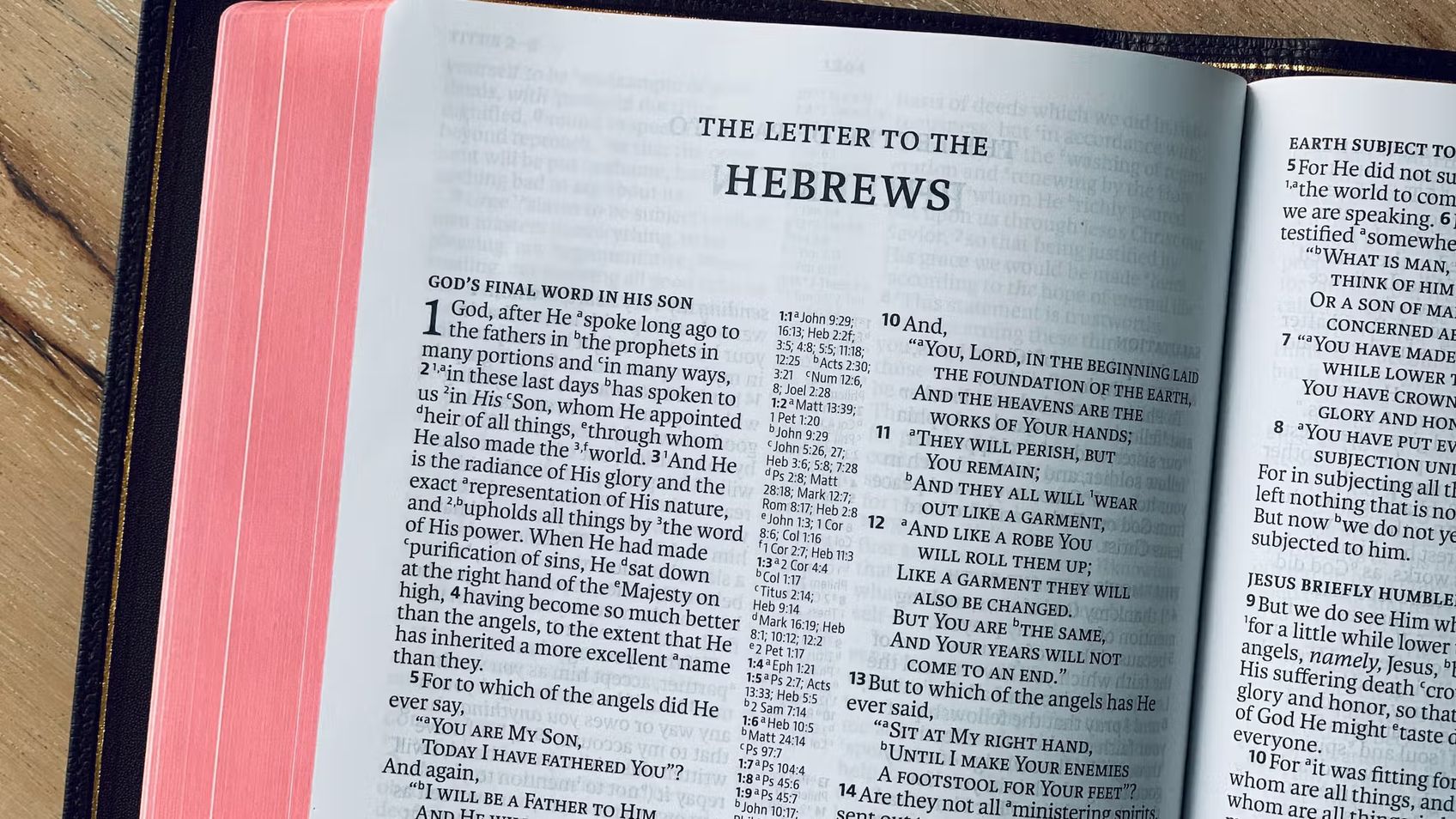
Hebrews 12:1 - 12:17

HebrewsSteve Gregg
Steve Gregg explores Hebrews 12:1-17, where he emphasizes that faith is not a virtue that a person possesses, but it is instead something that comes from making a judgment of God favorably. Gregg also notes that we are watched by a great cloud of witnesses as we run our race and thus, we should strip off the sins and weights that hold us back. The speaker compares the discipline involved in parenting to the discipline that comes from following God, which leads to maturity.
More from Hebrews
15 of 15
Next in this series
Hebrews 12:18 - 13:25
Hebrews
In this talk, Steve Gregg delves into Hebrews 12:18 - 13:25, focusing on several themes and warnings presented in the text. Gregg explains the analogy
13 of 15
Hebrews 11
Hebrews
In this exposition on Hebrews 11, Steve Gregg analyzes the profound and comprehensive nature of the exposition of faith. He emphasizes that faith is n
Series by Steve Gregg

Message For The Young
In this 6-part series, Steve Gregg emphasizes the importance of pursuing godliness and avoiding sinful behavior as a Christian, encouraging listeners
1 Corinthians
Steve Gregg provides a verse-by-verse exposition of 1 Corinthians, delving into themes such as love, spiritual gifts, holiness, and discipline within

Charisma and Character
In this 16-part series, Steve Gregg discusses various gifts of the Spirit, including prophecy, joy, peace, and humility, and emphasizes the importance
Proverbs
In this 34-part series, Steve Gregg offers in-depth analysis and insightful discussion of biblical book Proverbs, covering topics such as wisdom, spee
Judges
Steve Gregg teaches verse by verse through the Book of Judges in this 16-part series, exploring its historical and cultural context and highlighting t
Ten Commandments
Steve Gregg delivers a thought-provoking and insightful lecture series on the relevance and importance of the Ten Commandments in modern times, delvin
2 Timothy
In this insightful series on 2 Timothy, Steve Gregg explores the importance of self-control, faith, and sound doctrine in the Christian life, urging b
2 Corinthians
This series by Steve Gregg is a verse-by-verse study through 2 Corinthians, covering various themes such as new creation, justification, comfort durin
The Jewish Roots Movement
"The Jewish Roots Movement" by Steve Gregg is a six-part series that explores Paul's perspective on Torah observance, the distinction between Jewish a
3 John
In this series from biblical scholar Steve Gregg, the book of 3 John is examined to illuminate the early developments of church government and leaders
More on OpenTheo
Does Open-Mindedness Require Studying Other Religions Before Becoming a Christian?
#STRask
February 9, 2026
Questions about the claim that if Christians really want to be open-minded, they need to read and study other religions before committing to Christian
How Would You Convince Someone That Evil Exists?
#STRask
November 17, 2025
Questions about how to convince someone that evil exists, whether Charlie Kirk’s murder was part of God’s plan, whether that would mean the murderer d
Shouldn’t I Be Praying for My Soul Rather Than for Material Things?
#STRask
February 2, 2026
Questions about whether we should be praying for our souls rather than for material things, why we need to pray about decisions, whether the devil can

Lora Ries: Border Security and Immigration Policy
Knight & Rose Show
December 7, 2025
Wintery Knight and Desert Rose welcome Lora Ries to discuss border security and immigration policy. They explore Biden's policy changes, like ending R
Is 1 Corinthians 12:3 a Black-and-White Tool for Discernment?
#STRask
October 27, 2025
Questions about whether the claim in 1 Corinthians that “no one can say ‘Jesus is Lord’ except in the Holy Spirit” is a black-and-white tool for disce
Why Should We Pray If God Already Knows What’s Going to Happen?
#STRask
January 29, 2026
Questions about why we should pray if God already knows what’s going to happen, how the effectiveness of prayer is measured, and whether or not things
Keri Ingraham: School Choice and Education Reform
Knight & Rose Show
January 24, 2026
Wintery Knight and guest host Bonnie welcome Dr. Keri Ingraham to discuss school choice and education reform. They discuss the public school monopoly'
Why Do We Say Someone Was Saved on a Particular Date If It Was Part of an Eternal Plan?
#STRask
November 24, 2025
Questions about why we say someone was saved on a particular date if it was part of an eternal plan, the Roman Catholic view of the gospel vs. the Bib
Who Wrote the Gospels? Michael Licona vs. Bart Ehrman - Part 2
Risen Jesus
March 18, 2026
Did Matthew, Mark, Luke, and John write the gospels that bear their names? The texts themselves do not name them as the authors and were published and
Does God Really Need a “Pound of Flesh” to Forgive Sins?
#STRask
January 12, 2026
Questions about how to answer the challenge that God doesn’t need a “pound of flesh” to forgive sins but can simply forgive, and whether the claim in
Isn’t the Covenant in Scripture Explicitly with Israel and Not the Gentile Nations?
#STRask
March 12, 2026
Questions about what gives modern Christians confidence that they’ve inherited the Jews’ covenant with God if Scripture explicitly says it was with Is
Brian Miller: Fine-Tuning and the Multiverse Theory
Knight & Rose Show
March 7, 2026
Wintery Knight and guest host Terrell Clemmons welcome Dr. Brian Miller to discuss the the evidence for fine-tuning in physics and cosmology and the m
Are Demon Possessions and Exorcisms in the New Testament Literal?
#STRask
December 11, 2025
Questions about whether references to demon possessions and exorcisms in the New Testament are literal, how to talk to young children about ghosts, an
How Can I Explain Modesty to My Daughter?
#STRask
November 27, 2025
Questions about how to explain modesty to a nine-year-old in a way that won’t cause shame about her body, and when and how to tell a child about a pre
Who Wrote the Gospels? Michael Licona vs. Bart Ehrman - Part 1
Risen Jesus
March 11, 2026
Did Matthew, Mark, Luke, and John write the gospels that bear their names? The texts themselves do not name them as the authors and were published and